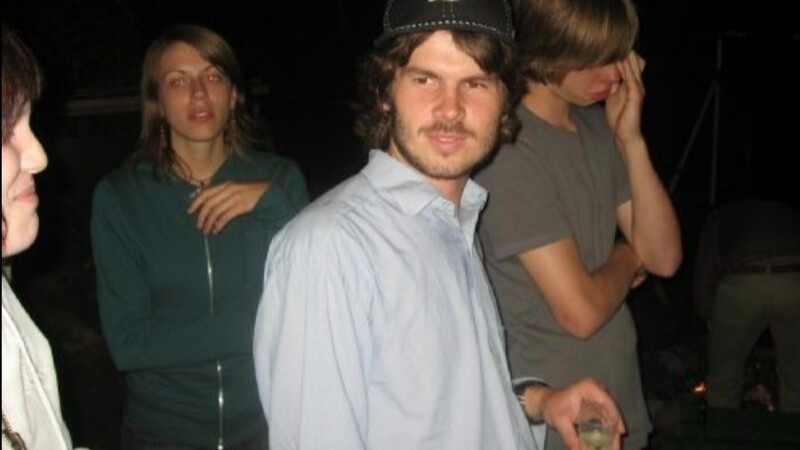
friLingue celebrates its 18th anniversary: The story of an adventure born from a conviction
Eighteen years old. The age of majority, the age of possibilities. This year, friLingue reaches this symbolic age, a perfect moment to look back at the journey since that first camp in July 2007. From 29 participants spread over two weeks to thousands of young people welcomed in our camps across Switzerland, friLingue's story is one of a vision becoming reality: "Joy teaches language."
But how did it all start? Here's the story told by the founder himself, Philipp Alexander Weber, who looks back at the chaotic beginnings, the doubts, the first victories – and that conviction that never wavered.
How it all started
This year, friLingue celebrates its 18th anniversary. A perfect moment to look back – and perhaps inspire others to embark on their own adventure. People often ask me: "How did you come up with the idea of creating a holiday camp?" The answer isn't linear.
Economics or philosophy?
After high school, I actually wanted to study philosophy – I loved deep discussions, new perspectives, asking the big questions. But I was never good at memorizing facts. And school always frustrated me – too rigid, too dry, too lifeless.
So I ended up studying economics in Fribourg, in German and French – a pragmatic choice because I was good at math. But the spark wasn't there. I didn't just want to "find a job." I wanted to build something that mattered.
From ski instructor to clown – always with young people
During my studies, I tried everything: I ran ski camps, worked as a ski instructor, helped organize children's events for an agency (for 3 years – I loved it), I even worked as a clown. I had dozens of temporary jobs.
What connected it all? Working with young people. And: my love for international exchanges. I had already done several language stays myself in France and Australia – and I loved the atmosphere.
Then came the turning point: I accompanied a group of Swiss teenagers to England – as a camp leader with Linguista Sprachaufenthalte. Those six weeks clarified one thing: I want to do this. But my way.
The first step in Fribourg
Back in my beloved student city of Fribourg, I made the decision: I'm going to rent the student center Centre Fries (from the University of Fribourg) and launch my own camp. Thank you Daniel Waldispühl!
That was the beginning. No business plan. No safety net. Just a clear vision: friLingue – "Joy teaches language" was my motto from day one.
The first camp (July 2007)
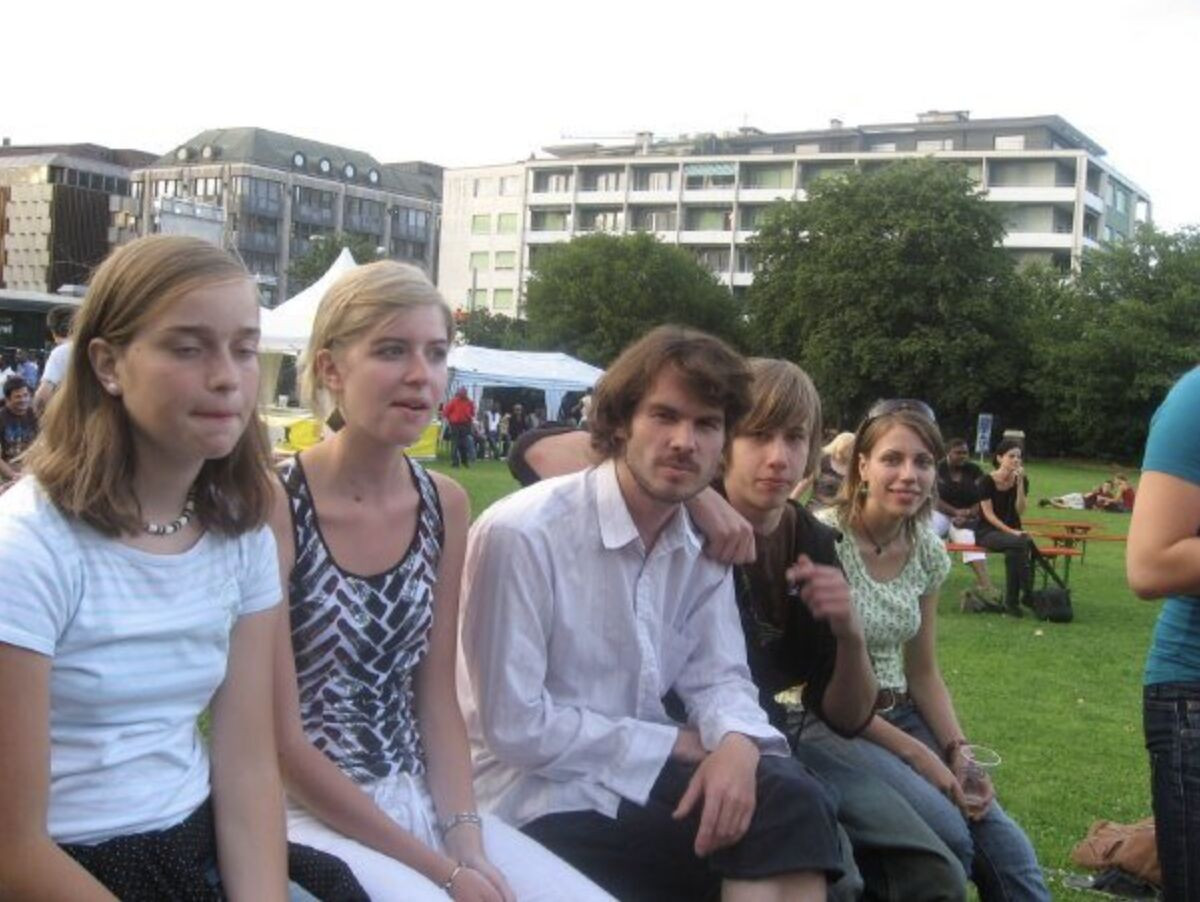
After months of dreams, planning and improvisation, friLingue's very first camp finally took place in July 2007.
We organized two sessions of two weeks each – with 29 participants in total. It was small, intense and full of heart.
Language, culture and connection
The core idea was simple: language immersion in German and French – through real experiences. Classes in groups of 6, every morning. Afternoon workshops in dance, theater and sports (I played the priest in Romeo and Juliet, which we performed in French and German). Local excursions to Lake Morat, Schwarzsee, Estavayer and the city of Fribourg. Some German-speaking children stayed with French-speaking host families.
An unforgettable moment
I still remember it clearly: our very first student – I think his name was Esteban – arrived at Fribourg train station, and I thought: "Wow... this is really happening." That moment was the true beginning of the adventure.
An international team, from day one
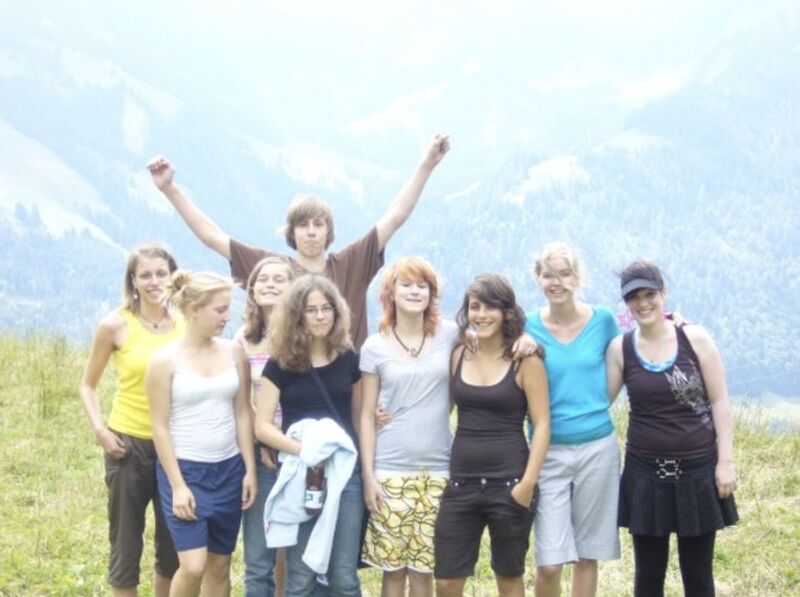
We were a small but international team: we had 3 volunteers per week and they came from Serbia, Canada, Switzerland and Germany (they helped with cooking, workshops and excursions). Everything happened at Centre Fries in Fribourg, a space that quickly became our home. Our paid teachers only worked in the morning, and we had a cook – but the rest of the day, it was me. I was the camp leader, the night watchman, the excursion guide, the evening program animator... It was hands-on, all the time – and I loved it. On the last day, we organized an open house for families, with a live concert by Peter Saarbach – our very first celebration.
A mission of accessibility
In the beginning, my dream was to create a camp for children from low-income families. I even offered scholarships – students could write a motivation letter and only pay 800 CHF for two weeks. But reality quickly caught up with me: most applicants came from well-off families. After two years, we stopped the program – not because we didn't believe in it, but because we realized: in Switzerland, financial need is complex. As our partners at Kovive told us later: "Even families in difficulty often have iPhones and cars – but they don't always invest in experiences like this." Since 2013, we've partnered with Kovive to offer 40 spots each year to children from modest backgrounds. The mission continues – just in a different form.
Chaos, improvisation and learning
Behind the scenes? Total chaos. But I discovered a secret strength: I was good at improvising. I acted like everything was going well – and somehow, it was.
When everything went wrong
People often think that if a project lasts 18 years, it must have started smoothly.
But the months before my first friLingue camp were filled with doubts, failures and small disasters.
My co-founder dropped out before we even started.
She was an educator, a friend of mine. I had convinced her to start the project with me – but after a few weeks, she realized it was too much. Her father had just passed away, and she told me she no longer believed in the idea. Suddenly, I was alone – just weeks away from building something from scratch. It shook me. But I told myself, if not now, then when?
I started with nothing
I had just finished university, I had no savings and I'd never had a "real job." I didn't want to ask my parents for help, so I borrowed 5000 CHF from a friend to get things started.
The flyers had no address
I printed my first flyer with a registration form – and I realized afterwards that my street number was missing (it had been cut off during the printing process). In 2007, applications were still sent by mail. I remember thinking: "Will they even arrive?"
From school to school
I spent days going from school to school, class to class, giving presentations and leaving flyers. Sometimes it was half-legal – but teachers were curious and often let me in. The idea spoke for itself. Then came the contrast: in the German-speaking part of Switzerland, this kind of approach worked. In Geneva, I had to go all the way to a high-level government office just to ask permission to distribute flyers – and in the end, they said no.
Tech failures and bad luck
In just two weeks: my first computer crashed and another was stolen at a party in my apartment. At one point, I honestly thought: "Maybe someone doesn't want this to happen."
The train encounter that changed my mindset
A few months earlier, I had signed up for a 7-day ski touring trip for advanced skiers – even though I had never tried ski touring before. I had just checked the "advanced" box on the registration form. It was brutal. Steep climbs. Long days. Deep snow. I struggled a lot. Then I ran into one of the girls from that trip on a train. She told me: "I was really impressed by your survival skills. You just kept going."
That stayed with me. Maybe that's my superpower – I keep going, again and again. And then... suddenly... the first applications arrived.
From 29 to 270 – the momentum years
The first year, we had 29 children. The second: 102. The third: 270 across three sites.
We were growing fast. I gave everything. I ran. But it wasn't just about numbers – it was about building something that felt different.
A different culture
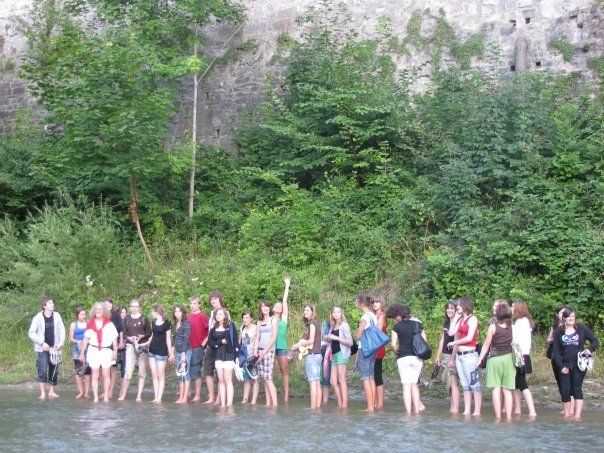
From the beginning, we tried to create a space where young people and teachers met as equals. In one of my very first manifestos, I wrote: "We're like friends – but respect matters. We use informal address. We speak openly. We listen. We grow together. We're punctual."
This wasn't just a slogan. It became an essential part of our culture – for both students and staff.
Structure and freedom – side by side
I always believed in a good balance between structure and flexibility. One of the first rules we established: classes start at 9:00 AM sharp. Because I never liked it when teachers arrived late. We mixed clear expectations with a sense of openness and fun. This rhythm created trust – and allowed space for spontaneity.
"Sprachcamp" – a word that set us apart
At the time, no one in Switzerland was using the word "Sprachcamp." We chose it deliberately – a fresh alternative to the more formal "Sprachaufenthalt." It felt more alive, more youthful. It helped define our brand – and gave us an early advantage in organic search.
Ahead on Google Ads (when it was still the Wild West)
In 2008, we started using Google Ads – well before most language camps even thought about it. It was a different era. Low competition. Low cost. Huge impact. That combination – a strong brand voice and early adoption of digital tools – gave us real momentum.
Learning by leading
Many of our early participants became volunteers, then camp leaders, and eventually even teachers. Some probably don't even realize how much they grew during those summers. Because being a camp leader at friLingue isn't just a job – it's a crash course in leadership, teamwork, communication and life.
Purpose AND practicality
We weren't there just for the money. We wanted to build something with heart, something that gave young people space to lead, to speak, to grow. Many of us try to create things that aren't just about revenue. But they still need to be viable. That's the balance. And somehow, friLingue managed to be both: rooted in values – and able to stand on its own.
Today, 18 years later, friLingue continues to carry that initial vision: creating spaces where language is learned through joy, where young people grow in confidence, and where each summer becomes an unforgettable adventure. Thank you to everyone who has been part of this story – and see you for the next 18 years!
