Host family immersion vs Language camp: which to choose?
The essentials: Host families offer total immersion in daily life and foster natural language progression, but can sometimes socially isolate the child and create constant pressure. Language camps combine structured learning and rich social interactions, offering a reassuring environment with peers of the same age, but immersion can be less intense if participants speak to each other in their native language.
friLingue's hybrid solution at St.Bernard brings together the best of both worlds: children benefit from camp activities and group life during the day, then return to German-speaking or French-speaking host families in the evening, creating a dual immersion that's both natural and supervised.
You're looking for the best option for your child to progress in languages? Between total immersion with a host family and the buzz of a language camp, it's a tough choice. Each option has its strengths, its limitations, and above all, suits different types of children. Let's break down these two approaches together to help you make the right choice.
Host family immersion: diving into daily life
The undeniable strengths
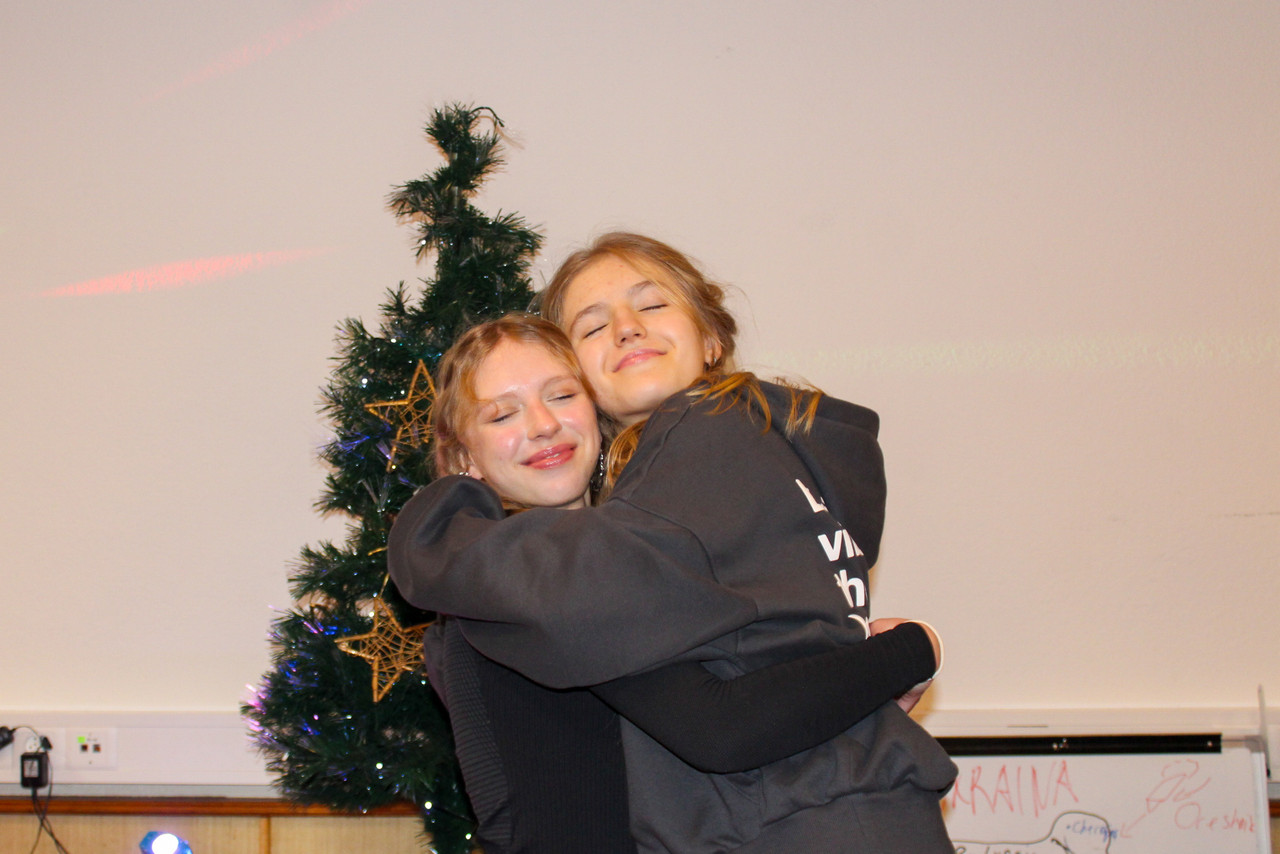
Living at the rhythm of a local family means immersing yourself in the language as it's really lived. No simultaneous translation, no escape route: at breakfast, during shopping, in front of the TV, your child bathes in a 100% authentic linguistic environment. This total immersion forces quick adaptation. Children develop their language reflexes naturally, learn everyday expressions that no textbook can teach, and discover cultural nuances from the inside. It's also an opportunity to create deep bonds with a family, sometimes lasting well beyond the stay.
For more independent and mature teenagers, this option can be particularly rewarding. It develops autonomy, adaptability, and self-confidence in a completely new context.
The limitations to consider
But this intensive immersion has its flip side.
For many children, especially younger or shyer ones, finding themselves alone in an unknown family can be unsettling. The absence of other young people their age, the constant pressure of having to communicate in a foreign language without a break, the lack of structured activities can transform the experience into a source of anxiety rather than a linguistic adventure. There's also the question of compatibility. Even with careful matching, the dynamic between the child and the host family doesn't always work perfectly. Some children feel isolated, watched, or simply uncomfortable in this setting that's both intimate and foreign.
Finally, without a structured pedagogical framework, progress can be uneven. A child who's not comfortable might stay in the background, multiply misunderstandings, and ultimately communicate little, thus limiting the linguistic benefits of the stay.
Language camps: learning while having fun
A reassuring and dynamic option
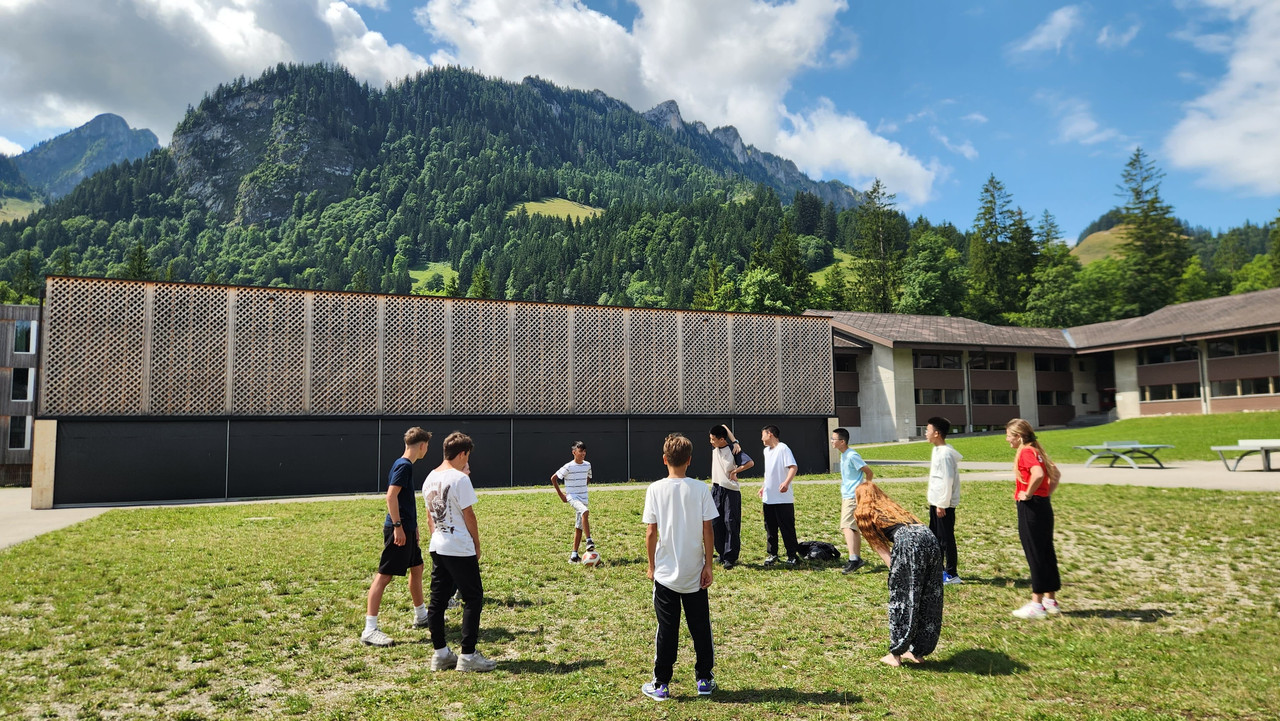
Language camps offer a completely different setting. Here, your child isn't alone facing a foreign family, but surrounded by other young people living the same adventure. This social dimension is fundamental: friendships form quickly, confidence develops in a fun and caring environment.
Learning is structured but never rigid. Small group classes alternate with sports, creative or cultural activities where the language is practiced naturally. The instructors, trained in language pedagogy, know how to adapt their approach to each level and create motivating learning situations.
For more reserved children, this option can be liberating. The group creates a positive dynamic where everyone dares to express themselves without fear of judgment. Games, team challenges, collective projects become opportunities to practice the language in a relaxed context.
Possible pitfalls
The main pitfall of language camps? The temptation for participants to speak to each other in their native language. When several French-speaking young people find themselves together, it can be difficult to maintain strict linguistic discipline, especially during free time. Immersion is therefore sometimes less intense than with a host family. Even if activities take place in the target language, informal moments can become comfortable linguistic bubbles where you fall back into your native language. Moreover, depending on the camp's quality, language supervision can vary. Some camps favor the recreational aspect at the expense of learning, while others find the right balance between fun and real progress.
Which profile for which option?
The host family will suit autonomous teenagers better, curious to discover a culture from the inside, comfortable with the idea of being the only young person in a foreign household. It requires a certain emotional maturity and genuine intrinsic motivation for the language.
The language camp will be ideal for children and teenagers who need the group to thrive, who love movement, varied activities and collective buzz. It's also the reassuring option for a first language stay, offering a social and emotional safety net.
friLingue's hybrid solution: the best of both worlds
What if you didn't have to choose? At friLingue, we've developed a unique formula that combines the advantages of both approaches.
How does it work?
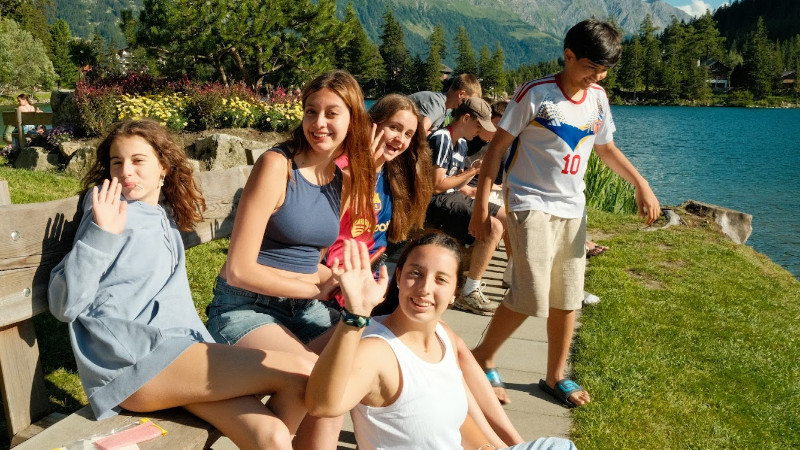
During the day, your child fully lives the camp experience: language classes in ultra-small groups, sports activities (hiking, tennis, water skiing, football, etc.), creative workshops, and above all, rich interactions with other young people from all over Switzerland. This social dimension creates a motivating and reassuring dynamic.
But when evening comes, our participants have a choice: either join their French-speaking host family (at St.Bernard) to live more intimate and authentic moments, or stay in the camp atmosphere for evening activities and group entertainment and return to their host family later.
This flexibility is valuable. More sociable children can enjoy group evenings, while those who appreciate calm and family immersion opt for returning to their host family. And even for those who choose to stay at camp in the evening, simply sleeping at a local family's home and sharing breakfasts in the target language creates natural daily immersion.
The concrete advantages of this approach
This hybrid formula offers several major benefits. First, it reduces the pressure of total immersion while maintaining authentic daily contact with the language. Children have breathing moments with their peers, then find themselves naturally immersed in a local family context.
Next, it allows linguistic progression on multiple levels: the vocabulary and structures learned in morning classes are naturally reactivated in evening conversations with the host family. The child isn't confronted with linguistic "all or nothing," but with a gentler and more effective gradation.
Finally, this approach respects everyone's rhythm. A shy child can lean on the group during the day to gain confidence, then take advantage of the more intimate family setting in the evening to practice in a less intimidating context. Conversely, a very social child can multiply opportunities to speak the target language, both with instructors and other participants and with their host family.
The Swiss natural environment as a catalyst
Our site also offers an exceptional natural setting that enriches the experience. At St.Bernard, mountain hikes and discovering the historic pass create shared moments where French is practiced in wonder.
These authentic alpine environments add a unique cultural dimension: host families in these regions embody local traditions, share their love of the mountains, and transmit a language rooted in a territory and a history. Your children don't just practice French, they live French-speaking Switzerland from the inside.
To conclude: language learning, a question of balance
There's no universal magic formula for language learning. Each child is unique, with their strengths, their apprehensions, their rhythm. What really matters is finding the approach that matches their personality and transforms learning into pleasure rather than constraint.
The hybrid formula we offer at friLingue was born from this conviction: why oppose what can complement each other? By combining the social richness of a camp and the authenticity of a host family, we create an environment where each child can chart their own linguistic path, at their own pace, according to their needs of the moment. Because ultimately, the best way to learn a language is the one where you feel confident enough to dare to speak, stimulated enough to want to progress, and happy enough that the memories created make you want to continue the adventure well after the stay.
FAQ
At what age can my child participate in a camp with a host family?
Our camps with host family option are accessible from age 9. For younger children, we recommend starting with a traditional camp with group accommodation to facilitate adaptation, then moving to the host family option during a future stay if they wish.
Can my child change their mind during the stay?
Absolutely! Flexibility is at the heart of our approach. If your child has chosen to spend evenings with the host family but ultimately prefers to join camp activities in the evening, we adapt.
How are host families selected?
All our host families are carefully selected and meet our team beforehand. We favor families who have lived in the region for a long time, who naturally speak French at St.Bernard in their daily life, and who have a genuine desire to share their culture with young people.
How many children per host family?
1 child per host family.
Does the option with host family cost more?
Rates vary slightly depending on camps and periods. The supplement for host family accommodation remains accessible and reflects the additional organizational cost and added value of this dual immersion. Check our camps' specific pages for detailed rates.

Teknologi 6 months ago
How does the removal of all "escape routes" like simultaneous translation in a host-family setting force a psychological shift from conscious language decoding to instinctive reflex formation, and does this intensity of "total immersion" create a unique type of cultural fluency—rooted in shared domestic rituals like breakfast or TV viewing—that remains inaccessible even to students with advanced textbook proficiency?
see