How to keep your kids busy this spring? We have an idea
The essentials: Spring break is coming, and with it that question every parent knows: how to keep the kids meaningfully busy without them spending two weeks glued to a screen? Our spring camps in the St. Bernard region combine 15 hours of classes (languages or math, your choice), creative and sports workshops in the afternoon, excursions in the Valais Alps, and evening activities that end each day in laughter. All in a mountain chalet, with full board, and phones limited to 1 hour per day. For the passionate ones, tennis or horseback riding options are also available.
School holidays are a bit like the ultimate test for parents. On one hand, we want our kids to rest, have fun, enjoy themselves. On the other, we'd like them not to lose everything they learned during the term, or maybe even get a bit ahead.
Good news: the two aren't incompatible. Since 2007, we've been welcoming children aged 8 to 17 to our spring camps in Liddes, in the Grand St. Bernard region. And we can tell you one thing: they don't see the time pass.
Mornings: classes that don't look like school
Let's immediately forget the image of rows of desks and the teacher reciting their lesson while students stare out the window. At friLingue, mornings work differently.
Each child chooses their subject: English, German, French, or mathematics. Fifteen hours of classes per week, spread over the mornings. But careful, fifteen hours that fly by.
Why? Because our groups have a maximum of six participants. Six. Not twenty-five like in a regular classroom. With six students, it's impossible to hide at the back of the room. Everyone participates, everyone speaks, everyone progresses.
Our teachers aren't there to make kids recite vocabulary lists. They're native speakers (or native level) who focus on speaking, on real communication. Classes involve games, debates, role-playing. You learn to order a meal, defend your opinion, tell a story. There's grammar too, of course, but it comes naturally, serving what you want to say, not as an end in itself.
Children are grouped by levels, from beginner (A1) to the most advanced (B2/C1). And teachers also adapt to the group's interests. If a class wants to work on song lyrics or prepare a sketch, that's possible. The goal isn't to make your child bilingual in a week—let's be honest, that doesn't exist. The goal is to make them want to learn, to show them that a language is useful, that you can have fun practicing it. It's teaching them how to learn.
Afternoons: create, move, explore
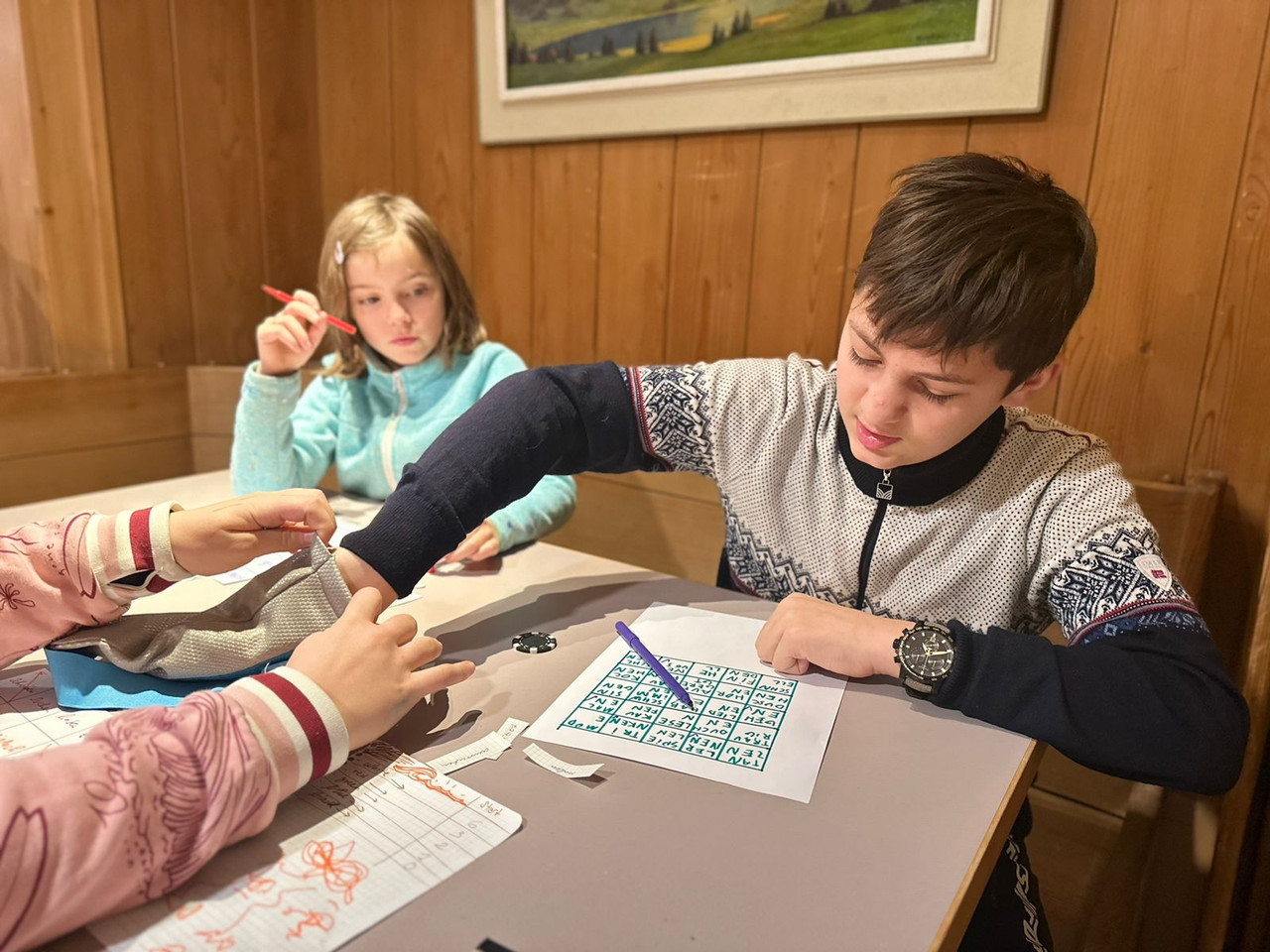
After lunch, the notebooks go away. The afternoon belongs to workshops. Each day, participants choose from several activities. The list changes depending on the session, but here's a glimpse of what we might offer:
- For the creative ones: painting, clay sculpture, building birdhouses, making a short film, etc.
- For the strategists: chess workshop (tactics, problems, games), AI workshop, etc.
- For the sporty ones: basketball, baseball, hikes to learn to identify wild plants, etc.
These workshops aren't just filler. They allow children to discover new passions, develop skills they don't necessarily explore at school, and most importantly, continue communicating with other participants, often in the language they're learning.
Because yes, in our camps, children come from all over Switzerland (and beyond). French speakers, German speakers, sometimes Ticino kids. And when a French speaker wants to explain the rules of baseball to a German speaker, guess which language they use? The one they're learning. That's natural immersion.
Excursions: Valais as a playground
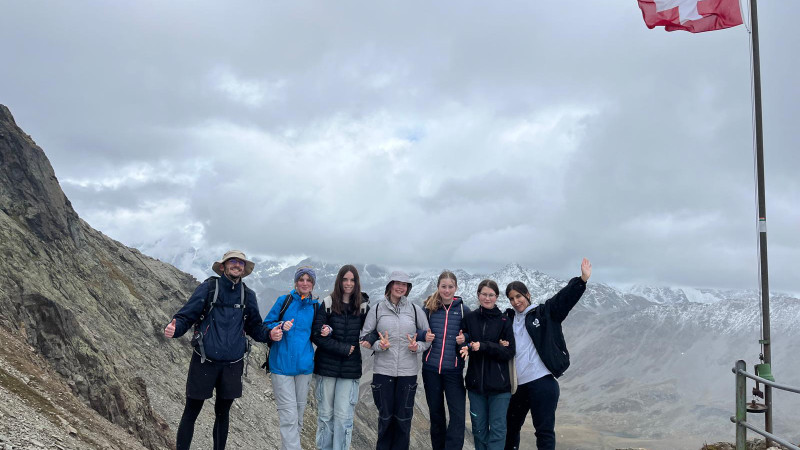
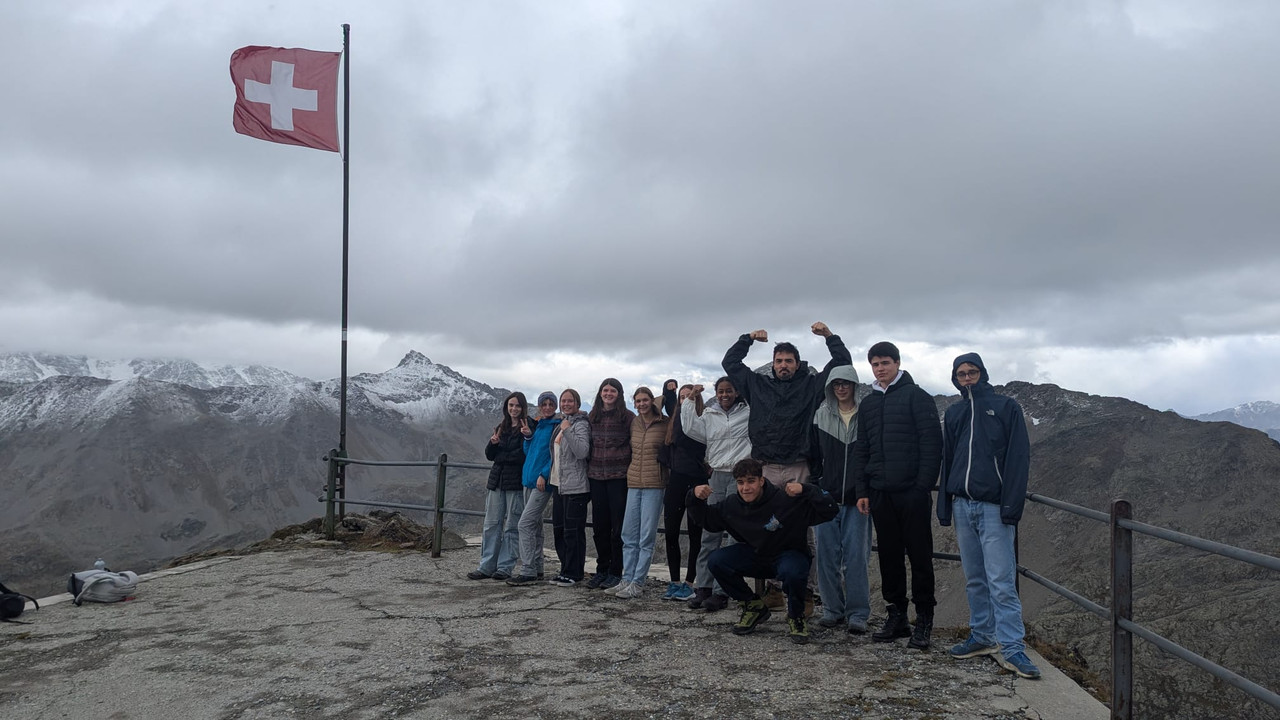
Two afternoons per week (plus Saturday), we head out on excursions. The Grand St. Bernard region is an extraordinary playground, and it would be a shame to stay at the chalet.
On the program: Lake Champex, with its mountain reflections; hikes in the alpine pastures where we sometimes cross paths with the famous St. Bernard dogs; laser tag in the forest (yes, teens love it); discovering Sion and its castles; sometimes even an escape to the Aosta Valley on the Italian side, to end the day with a real pizza.
These excursions are also an opportunity to bond as a group, create memories, live adventures they'll talk about for years.
Evenings: the participants' favorite moment
After dinner (prepared by our chef, we'll come back to that), it's time for evening activities. This is often the moment kids look forward to most.
Disco night, karaoke, board game tournament, casino (with fake chips, don't worry), campfire, werewolf game, giant hide-and-seek in the chalet... Each evening brings its surprise. Our activity team makes it a point of honor that no one gets bored, and that everyone goes to bed with a smile.
Accommodation: a real mountain chalet
Participants sleep in our Liddes chalet, in dorms or shared rooms. Shared toilets and showers, summer camp atmosphere, friendships that form by flashlight after lights out.
When it comes to meals, we don't skimp: three meals a day prepared by our chef, plus fruits and snacks throughout the day. Kids move around a lot, they need fuel. We make sure they don't lack anything.
.jpg)
Phones: one hour a day, no more
We know this can worry some teens (and some parents). But our rule is clear: phones are limited to one hour a day, usually at the end of the day (exception for excursion days, when kids have access to their phones on the go, for safety reasons, but also so they can take photos).
Why? Because we've seen the difference. Kids who disconnect from their screens talk to each other more, participate more in activities, create stronger bonds. They live their camp instead of filming it. And honestly, after a day of classes, workshops, excursions, and evening activities, they don't really have time to miss their phone.
Tennis option: for those who dream of Wimbledon
Is your child passionate about tennis? We thought of them.
For an additional 150 CHF per week, they can replace the afternoon workshops with tennis sessions. Training, challenges, matches, all supervised by experienced coaches, on an outdoor court (or indoor if the weather acts up).
The coaches speak English during sessions. One more way to practice the language, racket in hand. We work on game techniques, sport rules, and above all, the pleasure of hitting the ball with the Alps as a backdrop. Hard to find a more inspiring setting.
Horseback riding option: for horse lovers
Horseback riding is also possible. For 250 CHF per week, your child can swap the workshops for lessons in Verbier, three times a week (Monday, Wednesday, and Friday afternoons).
This option suits beginners and riders with basic knowledge, but not experienced riders looking for intensive training. The idea is to discover horseback riding in a beautiful setting, with passionate instructors.
Why spring?
Summer camps have their charm, that's true. But spring has something special. The mountains wake up. Snow melts on the peaks, flowers start to break through, the air is fresh but the sun warms. It's the ideal season for hiking, for observing nature coming back to life.
And then, spring often falls at a strategic moment in the school year. Far enough from exams for kids to breathe, early enough to consolidate what they've learned before the final sprint.
What we don't promise you
We don't promise that your child will come back bilingual. That would be lying to you. We don't promise either that they'll love every minute. There might be a workshop that bores them, an excursion in the rain, a roommate who snores. What we promise you is that they'll live a real experience. That they'll meet people different from them, that they'll step out of their comfort zone, that they'll discover things about themselves. That they'll come back with stories to tell, friends to see again, and probably the desire to come back next year.
And that, for us, is worth all the marketing promises in the world.
FAQ: your questions, our answers
What age can participate in spring camps?
Spring camps in Liddes/St. Bernard welcome young people from 8 to 17 years old. Children are grouped by age and level for both classes and activities.
Can my child choose math instead of a language?
Absolutely. We offer English, German, French, and mathematics. They choose according to their needs or interests.
How many children are there per class?
Six maximum. It's our trademark. With groups this small, each child has time to speak, ask questions, progress at their own pace.
Are the teachers real educators?
Yes. They're experienced teachers, native or native-level in the language taught. They're trained in our methods, which emphasize speaking and a playful approach.
My child is shy. Will they manage to fit in?
This is a common worry, and we understand it. The good news: small groups and the welcoming atmosphere help enormously. Most "shy" children make friends from the first day. Our team is also trained to make sure no one stays isolated.
What happens if my child has food allergies?
Let us know at registration. Our chef adapts meals according to needs. For complex allergies (like gluten intolerance), a supplement of 100 CHF is required to guarantee adapted meals.
Can my child call home?
Yes, during the daily hour dedicated to phones. In case of emergency or homesickness, our team can also arrange a call outside this time slot.
Is a certain level required to enroll in language classes?
No. We welcome all levels, from complete beginner (A1) to advanced level (B2/C1). A placement test on Sunday evening helps form balanced groups.
Does the tennis or horseback riding option replace morning classes?
No. These options only replace afternoon workshops. Language or math classes in the morning are maintained.
How do arrivals and departures work?
Arrival is on Sunday between 5 PM and 6 PM at the chalet. Departure takes place the following Saturday, usually between 3:30 PM and 4 PM. Accompanied transfers from Zurich or Bern are possible for an additional fee.
What if my child gets homesick?
It's normal, especially for a first experience. Our team is trained to handle these moments with patience and kindness. We offer activities to take their mind off things, we allow a call home if necessary. In the vast majority of cases, homesickness disappears by the second day, when the first friendships form.
More questions? Contact us at info@frilingue.com or at +41 (0)26 321 34 34. We're always happy to talk with parents, that's also friLingue.
