Language camp and maturity: what the science says, and what we observe at friLingue.
The essentials: Parents often send their child to a language camp hoping they'll come back with a better level of German, French or English. And it works. But what many parents don't see coming is everything else. The more confident look on their face when they return. The way they handle a disagreement without running to an adult. That new ability to adapt. A language camp isn't just a linguistic accelerator. It's a mini school of life. And the numbers, for once, back up what parents observe.
What actually happens during the two weeks your child is away from you
Let's be honest. The first 24 to 48 hours aren't always easy. Not for your child, and not for you (especially not for you, actually). Clinical psychologist Michael Thompson explains it well in his work: true independence is something parents cannot give their children, they have to experience it themselves. And that's essentially what camp is.
Your child no longer has anyone to decide for them what to eat first on their plate, to settle the argument over who gets the bottom bunk, or to tell them whether their jumper is appropriate for the weather. They have to manage. And that's exactly where it all begins.
Autonomy is learned by doing (not by watching)
What studies on holiday camps show in a rather striking way is that the effects on autonomy are among the most measurable and the most rapid. Research synthesising data from numerous residential programmes shows that more than 70% of young people report a significant increase in their independence after a stay, and more than 50% an improvement in their personal organisation (American Camp Association).
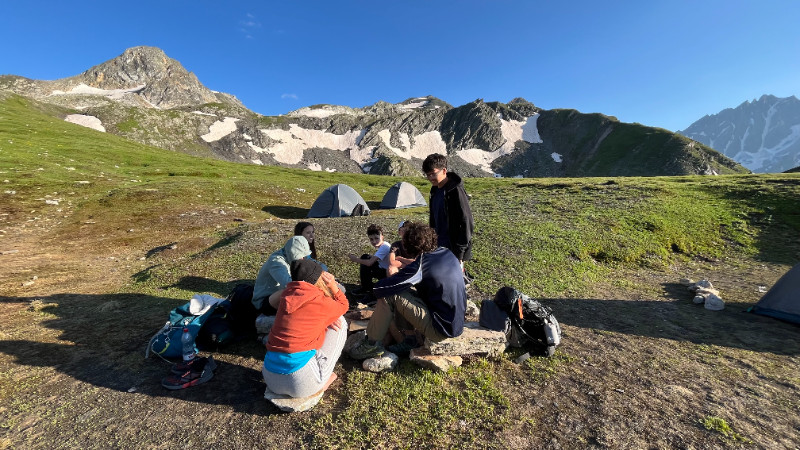
What does that actually look like? A child who tidies their things because nobody has reminded them ten times. A teenager who gets up on time because breakfast doesn't wait. A 10-year-old who packs their own hiking bag, checks they have their water bottle, and even remembers to put on sunscreen.
At friLingue, we see this every session. Children who arrive on Sunday evening searching the room for their parent, and who leave two weeks later looking like someone who knows exactly what they're doing.
Living together is something you also have to learn
There's something that life at home doesn't really teach: cohabitation with people you didn't choose. At home, your child shares their space with people they've known their whole life. At camp, they share a room with strangers, eat with people who don't have the same habits, and navigate a group with its own rules, its own dynamics, its own tensions.
It's uncomfortable, sometimes. And that's exactly why it's so formative.
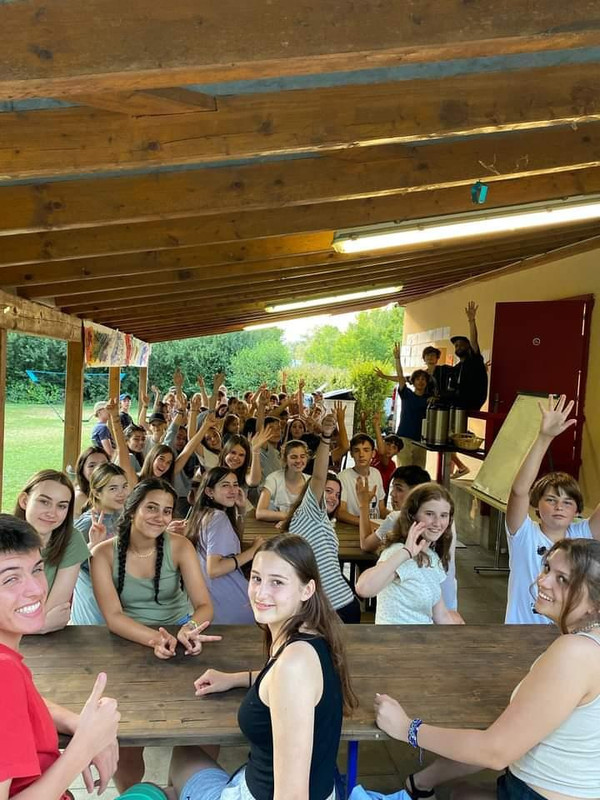
Research on residential stays is clear: more than 75% of young people who participated in a residential camp report improved teamwork skills. And not just in structured activities, but in everyday camp life, around a meal, during an evening gathering, on a hike where you have to wait for the slowest person in the group without making a comment.
Learning to share space, to respect a shared rhythm, to say something when things aren't right without it escalating into a conflict: that's social maturity, and it's built in those moments.
Language camp adds an extra layer: useful vulnerability
What sets a language camp apart from a regular holiday camp is that your child is placed in a slightly more uncomfortable situation: they have to express complex things (an emotion, a need, an idea) in a language that isn't their own. And that is a rather unique maturity accelerator.
Because when you can't rely on your usual words, you learn to find other ways. You learn to be patient with yourself. You learn to ask for help without being ashamed of it. You learn that not understanding everything doesn't stop you from making yourself understood.
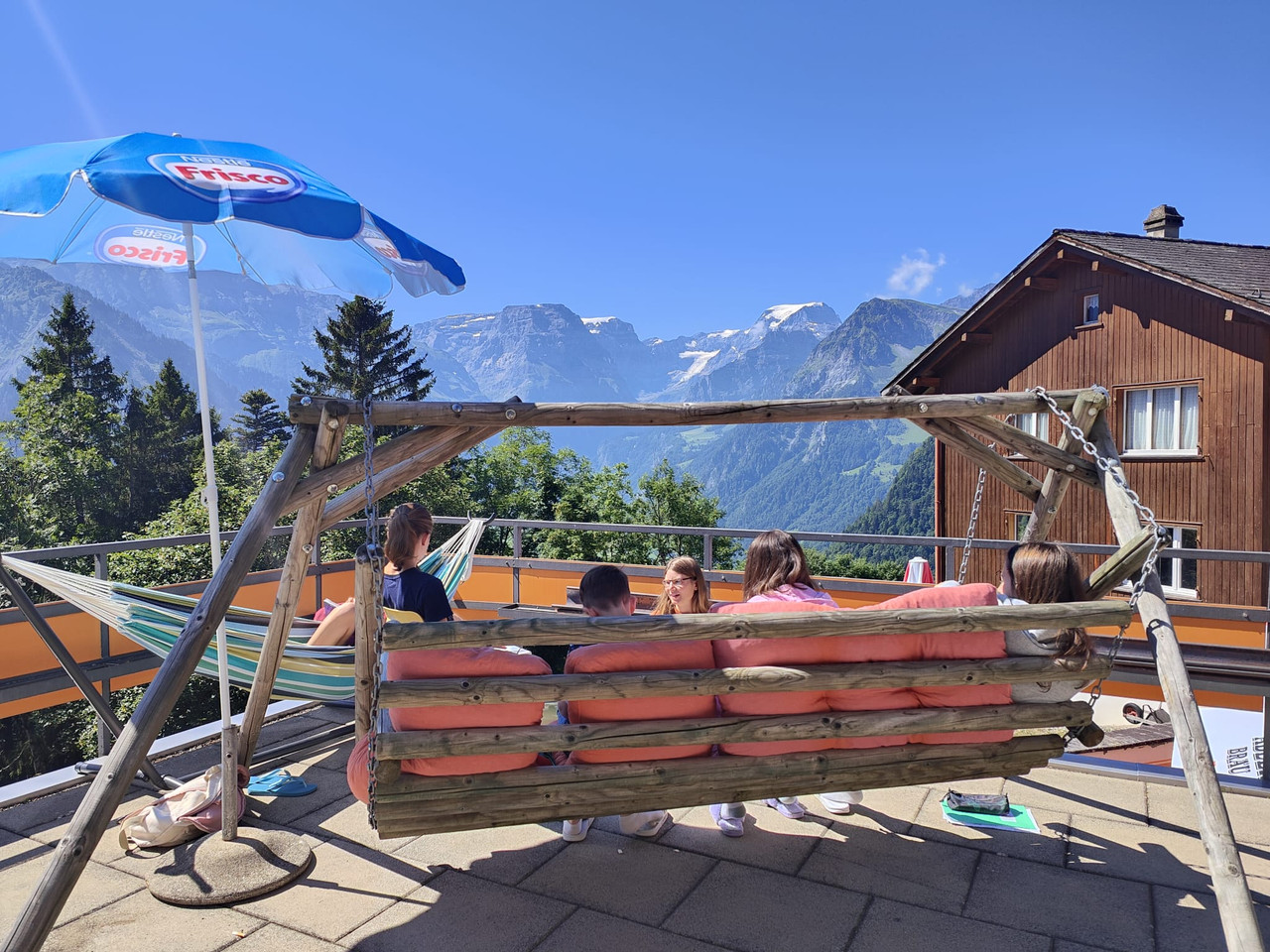
We remember an 11-year-old participant who arrived in Braunwald with a beginner level of German and a shyness that clung to her like a second skin. After five days, she was organising games with her German-speaking campmates, mixing the three German words she knew with gestures and an impressive amount of energy. She hadn't waited to feel comfortable before throwing herself in. That's the kind of self-confidence that sticks.
The numbers that confirm what you observe
We like to draw on solid sources, so here are a few figures from research on residential camps and immersion programmes:
- More than 80% of former campers say they felt more comfortable making new friends after their stay (American Camp Association, 2019).
- Between 60 and 80% report progress in terms of leadership and taking initiative.
- And experiential learning programmes produce gains of around 15 to 30% on problem-solving tests.
These aren't abstract figures. They're exactly the skills your child will put into practice on the first day back at school, during an oral presentation, when dealing with a conflict with a classmate, or simply taking public transport on their own for the first time.
And what about you?
Let's not kid ourselves: letting go isn't easy. There's a reason some parents contact us at day two to check how their child is getting on, when that same child is busy around a campfire singing a song in English with twelve new friends.
Camp is also a first step towards something bigger. An autonomy that can't be handed over, but has to be lived. And often, it's the return home that says it all: that new way of handling a frustration, of tidying things away without being asked, of taking initiative.
Those small things are maturity. And it's not something you can teach from a textbook.
FAQ
Will my child struggle if their language level is too low?
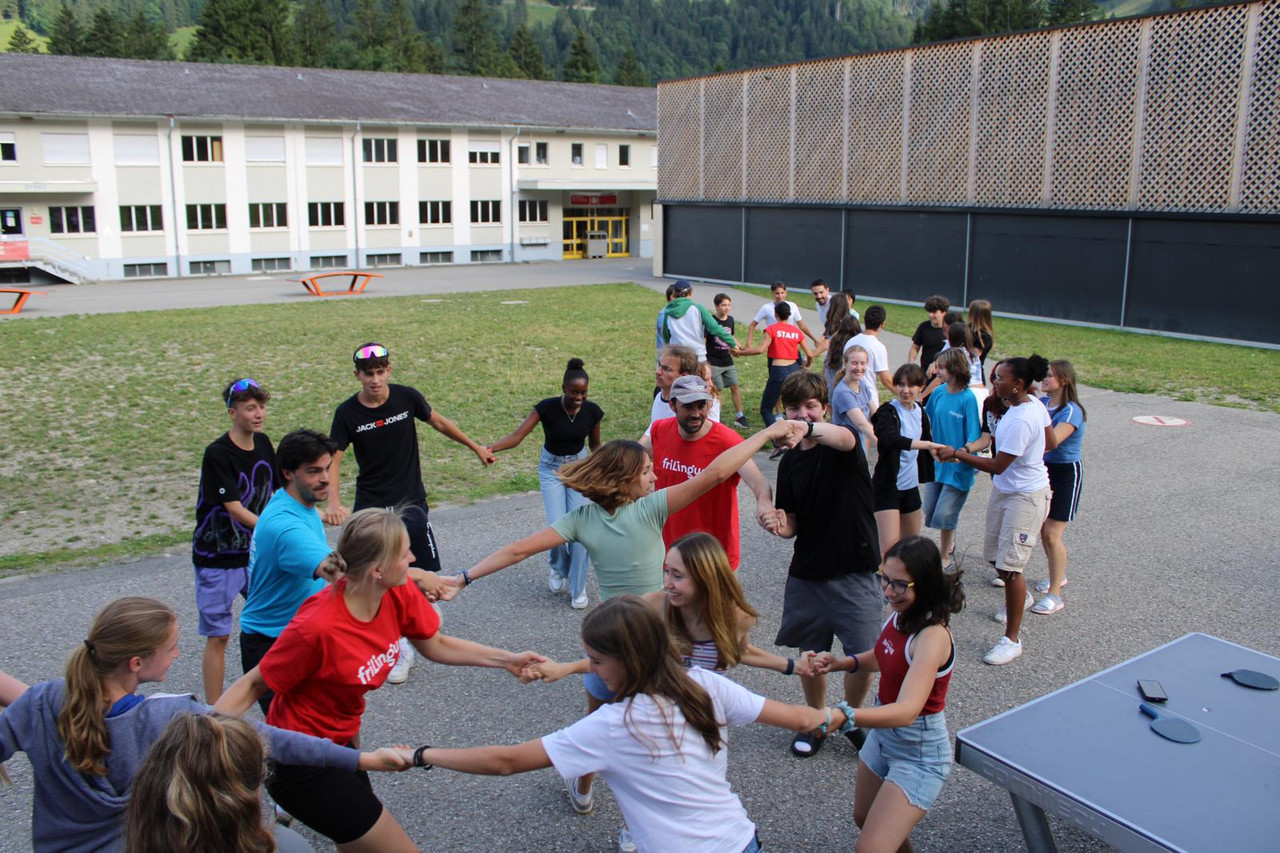
Not at all. friLingue's groups of six allow courses to be tailored to each child's exact level. And outside of lessons, the language becomes a game, not a constraint.
At what age can we consider a first stay?
At friLingue, we welcome children from age 8. The key thing is that your child feels emotionally ready to spend a night away from home. One week is a good length for a first stay.
My child is very close to me, will it be hard for them?
Probably for a day or two. And then the magic of the group kicks in. Children who are most attached to home are often the ones who progress the fastest, once that click happens.
Can progress in language and maturity really go hand in hand?
They're not just compatible, they reinforce each other. A child who learns to push through the awkwardness of speaking a foreign language develops exactly the same resilience they'll apply in every other area of their life.
What if my child doesn't want to go?
It's common, and it's normal. Most children who "didn't want to go" are the ones who come back asking to go again the following year. We have plenty of testimonials on that front, but more than anything, we have a lot of smiling parents at pick-up time.
