The perfect age to learn a language (spoiler: it’s not what you think)
The key takeaway:
“You have to start as early as possible, otherwise it’s too late!”
You’ve probably heard this at a family dinner—most likely from someone who has never managed to order a coffee in English. The truth is, science tells a much more nuanced—and far more encouraging—story. Yes, children do have certain neurological advantages. But no, there is no age at which it becomes “too late.” What truly matters is the quality of immersion, motivation, and the learning context. Whether your child is 8, 12, or 16, the best time to start is now.
The myth of the “magic window” that closes
This belief comes from neurologist Eric Lenneberg, who proposed the “critical period hypothesis” in 1967: brain plasticity would decline sharply after puberty, making language learning much harder.
Since then, this idea has caused quite a bit of stress—especially for parents of teenagers.
However, modern research has significantly refined this view. A large MIT study involving over 600,000 people showed that while the ability to reach native-like pronunciation declines after around 17–18, the ability to learn a language remains strong well beyond that age.
So no—your 15-year-old has definitely not missed the opportunity.
And most importantly: Lenneberg was talking about acquiring a native language, not learning a foreign language in a camp setting. Confusing the two has led to a lot of unnecessary worry.
The real advantages children have
Let’s be honest: children do have real advantages—but not always the ones people expect.
First, pronunciation. Starting early clearly helps develop a more native-like accent. That’s why a 9-year-old will come back from camp saying “Grüezi” far more convincingly than their parents.
Second, they have no fear of making mistakes. Children don’t yet have that inner voice saying, “You’re going to sound ridiculous.” They just try, fail, and try again. This lack of inhibition is incredibly powerful.
Finally, the long-term effect. Research shows something surprising: teenagers and adults often learn faster at the beginning, but in immersive environments, children tend to reach a higher level over time.
Immersion matters more than age
Studies have shown that in a traditional school setting—just a few hours of language classes per week—the age at which you start is not a strong predictor of long-term success.
What really makes the difference is exposure: how much and how often the language is used.
And this is exactly where immersion changes everything.
When your child spends one or two weeks speaking, playing, eating, and laughing in another language, their brain is working on it 24/7. This is the environment where language learning becomes natural—and where younger learners thrive the most.
Ages 0–5: little sound geniuses
At this age, the brain is incredibly good at decoding sounds. Young children can distinguish subtle phonetic differences that adults no longer hear. This is the perfect time to expose your child to multiple languages through songs, books, games, or simply everyday conversation. No formal lessons are needed—every interaction becomes a language lesson.
Ages 6–10: little sponges
Children don’t analyze language—they live it. Put an 8-year-old in a group of German-speaking kids, and after just a few days, they’ll pick up more vocabulary than in months of classroom exercises. At this age, the only real challenge might be homesickness—but it usually disappears within a day or two.
Ages 11-14 : the sweet spot
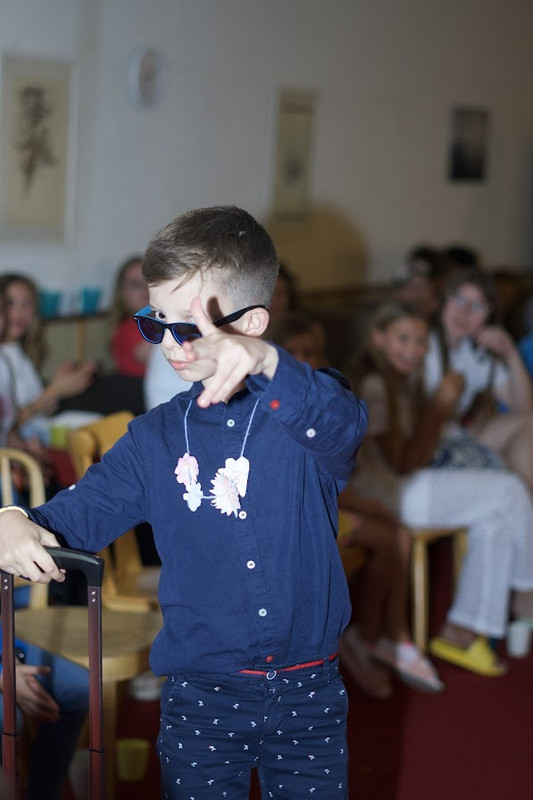
Brain plasticity is still strong, cognitive abilities are developing, and most importantly—making friends becomes a top priority. When those friends speak another language, motivation increases naturally. We’ve seen 12-year-olds arrive with beginner-level German and leave two weeks later holding full conversations.
Ages 15-18 : the sprinters
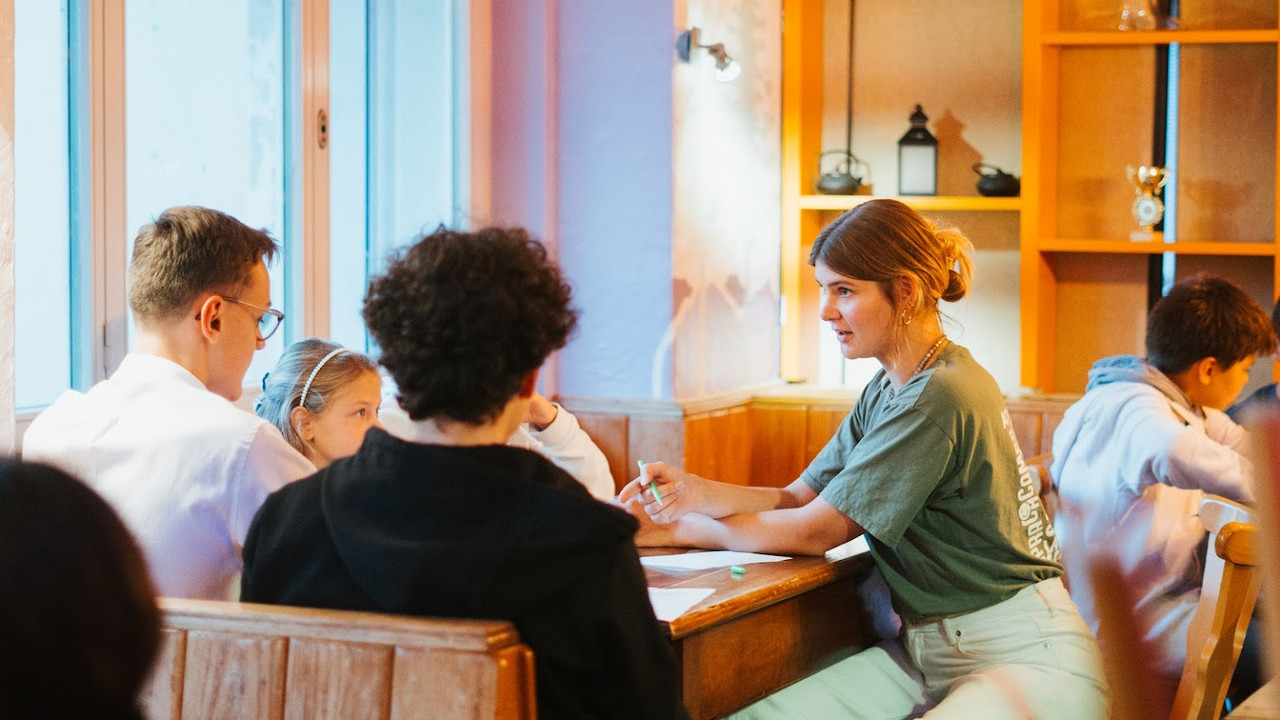
“It’s too late, they should have started earlier.” Not true. Teenagers often progress faster than younger children in the early stages of learning. A 16-year-old can make huge progress in just two weeks of intensive immersion. At this age, confidence is key—which is why at friLingue, classes take place in small groups of максимум six students, so even the more reserved ones feel comfortable participating.
Ages 18+ : the strategists
No, it’s not too late. And no, your brain is not “too old.”
Adults have advantages that children don’t:
the ability to understand grammar structures
to compare languages
to use conscious learning strategies
They learn differently—but they do learn.
At friLingue, we even offer family formats where parents and children can learn side by side. Because leading by example is often the best motivation, right?
FAQ
At what age can I send my child to a language camp?
At friLingue, we welcome children from age 8 in Braunwald and from age 9 in St. Bernard. What matters most is that your child feels emotionally ready to spend their first nights away from home.
Will my 15-year-old still make progress?
Absolutely. Teenagers often progress faster in the early stages. Two weeks of immersion at that age can lead to impressive results.
My child is shy—won’t camp be overwhelming?
Quite the opposite. Shy children are often the ones who surprise us the most. In a supportive environment with small groups, they gain confidence quickly. Shyness is not a barrier—it’s often the starting point of real growth.
How long should the first stay be?
One week is a great starting point. It’s long enough to experience real immersion and make friends. Most children who start with one week come back for longer stays later on.
Why not wait, if age isn’t that important?
Because exposure matters. The earlier your child accumulates hours of immersion, the greater the benefits—not just in language skills, but also in independence, confidence, open-mindedness, and international friendships.
