Supervision and Safety
Updated: November 3, 2026 (2026/27 season) · By Eloi Pacaud, friLingue
At friLingue's language camps in Liddes (St. Bernard, canton of Valais), Braunwald (canton of Glarus), Schwarzsee and Estavayer-le-Lac (both canton of Fribourg), staff are on site day and night. During the day there's about one staff member for every 5 children. At night at least 5 staff members are in the camp lodge, and the camp leader sleeps in the same building. At every camp, at least one person has completed a first-aid course; there is no doctor on site. For homesickness, the team talks with your child, keeps them busy and lets them call home, and if it gets serious, the camp leader calls you. You can reach your child during the daily phone time and the camp leader at any hour for anything urgent.
friLingue is a Swiss language camp provider with an office in Bern and camps in Liddes, Braunwald, Schwarzsee and Estavayer-le-Lac. Since 2007, friLingue has run supervised language and vacation camps for children and teens ages 8 to 17, booked by parents from across Switzerland.
The office team in Bern answers questions about supervision at your child's camp by phone: Book a call
"24/7 supervision" or "reachable 24/7"?
Camp providers use three terms that promise different things:
- 24/7 supervision: Staff are at camp day and night, including in the building where the children sleep.
- Reachable 24/7: Someone from the camp answers the phone around the clock. The term says nothing about whether anyone from the camp is in the house at night.
- Daytime supervision: Children are supervised during the program. Nobody from the camp is responsible at night, as with a day camp where you pick your child up in the evening.
If your child sleeps in the camp lodge, all four friLingue language camps offer both "24/7 supervision" and "reachable 24/7": staff are on site around the clock, and the camp leader sleeps in the same building and can be reached at any hour for anything urgent. At St. Bernard, campers can also stay with a host family. In that case the host family is responsible at night. "Daytime supervision" applies to the programs without an overnight stay, such as the English day camp for kids at the St. Bernard Family Camp. Those children usually sleep where their parents are staying.
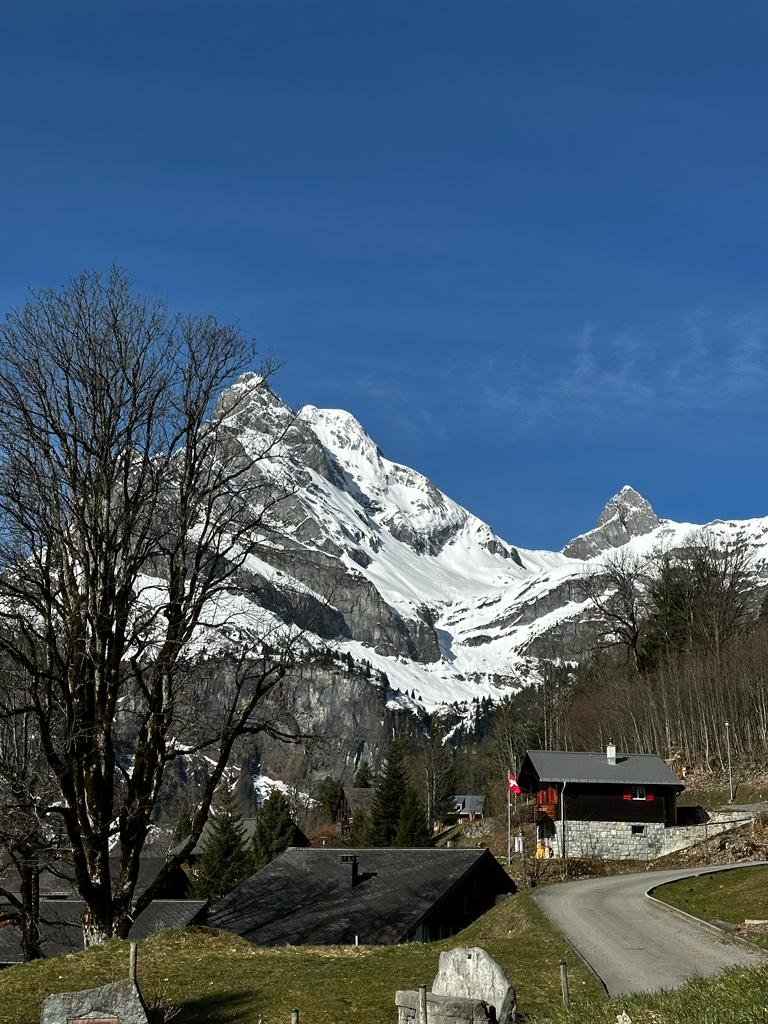
A mountain village in the Swiss Alps. friLingue’s camps in Liddes and Braunwald are in settings like this.
The limit is spelled out in section 12 of friLingue's Terms & Conditions: "friLingue does not, however, guarantee 24-hour supervision of young people." So round-the-clock supervision means someone from the team is always on site and available. It doesn't mean an adult has every child in sight every minute. The terms and conditions also state that friLingue is not liable if a child secretly leaves camp or breaks rules and schedules announced in advance.
Who at camp is responsible for what
Responsibilities are the same at every friLingue language camp in Switzerland:
- Camp leader: runs the camp, sleeps in the same building as the campers, can be reached at any hour for anything urgent and keeps the children's medications. The camp leader is your main point of contact during the camp week. Every camp leader has already worked at friLingue camps more than once, as a counselor or teacher. Nobody starts out as camp leader.
- Counselors and co-leaders: supervise workshops, outings, free time and evening activities. In summer, co-leaders join the team and count as staff for the ratio. Children never leave camp unsupervised, whether at meals, on outings or during free time.
- Night supervision: At night, at least 5 staff members are in the camp lodge. Someone is always available to the children, and the team checks the rooms. Lights-out is at 10 p.m., on weekends at 11 or 11:30 p.m., depending on the camp leader.
- Teachers: teach the basic course of 20 class periods of 45 minutes each per week in the mornings (15 hours), in classes of 6 students on average. They are trained teachers or teachers in training, all have teaching experience, and count as staff outside class as well.
- Person with first-aid training: Every camp has at least one.
- Kitchen: The kitchen team is part of the camp, knows every allergy that was reported and cooks separate meals for them.
- Office team in Bern: advises you before you book and can be reached during office hours.
Staff-to-child ratio: how many children per staff member
The figures below apply to friLingue's language camps in Switzerland. For programs abroad, the partner school's rules apply.
friLingue counts the camp leader, the teachers and, in summer, the co-leaders as staff. That works out to about 5 children per staff member during the day. The exact ratio depends on the number of children and the season. At night, some camps have slightly fewer staff on hand, because not all teachers sleep in the camp lodge. But there are always at least 5 staff members in the camp lodge. The upper limit is 12 children per adult staff member. In class, there are 6 students per teacher on average.
| Camp | Ages | Where children sleep | Day | Night |
|---|---|---|---|---|
| Language camp St. Bernard, Liddes (Valais) | 9 to 17 | in the camp chalet or with a host family | about 5 children per staff member | In the camp chalet, at least 5 staff members; the camp leader sleeps in the same building. With a host family, the host family is responsible. |
| Language camp Braunwald (Glarus) | 8 to 17 | in the camp lodge | about 5 children per staff member | At least 5 staff members are in the camp lodge; the camp leader sleeps in the same building. |
| Intensive bilingual camp and English camp Schwarzsee (Fribourg) | 12 to 17 | in the camp lodge | about 5 children per staff member | At least 5 staff members are in the camp lodge; the camp leader sleeps in the same building. |
| Language camp Estavayer-le-Lac (Fribourg) | 12 to 17 | in the camp lodge | about 5 children per staff member | At least 5 staff members are in the camp lodge; the camp leader sleeps in the same building. |
| English day camp for kids at the St. Bernard Family Camp | children of participating families | no overnight stay at camp | daytime supervision during the program | Children usually sleep where their parents are staying. |
- St. Bernard (Liddes, Valais), ages 9 to 17: about 5 children per staff member during the day. At night, at least 5 staff members in the camp chalet; with a host family, the host family is responsible.
- Braunwald (Glarus), ages 8 to 17: about 5 children per staff member during the day, at least 5 staff members in the camp lodge at night.
- Schwarzsee (Fribourg), ages 12 to 17: about 5 children per staff member during the day, at least 5 staff members in the camp lodge at night.
- Estavayer-le-Lac (Fribourg), ages 12 to 17: about 5 children per staff member during the day, at least 5 staff members in the camp lodge at night.
- English day camp at the St. Bernard Family Camp: daytime supervision during the program; children usually sleep where their parents are staying.
Medical care at camp
Every friLingue language camp has at least one person on staff who has completed a first-aid course. There is no doctor at camp. Every camp is no more than 30 minutes from a doctor's office or hospital.
- Before camp: You report your child's allergies, medications and any health conditions. friLingue records this information before camp starts.
- Medications: The camp leader keeps the medications, reminds your child to take them and makes sure they do, as agreed with you.
- Allergies and intolerances: For lactose or gluten intolerance, the kitchen prepares adapted meals. This comes with an extra weekly fee; the amount is listed in the FAQ.
- Minor complaints: The team takes care of colds, headaches or scrapes at camp. There is a camp first-aid kit with pain relievers, bandages and allergy medication.
- Doctor visits: For anything beyond that, friLingue contacts you right away and drives your child to the nearest doctor's office or hospital. By friLingue's own count, campers at its Swiss camps needed a doctor about 10 times in 2026, out of roughly 1,000 campers, for sports injuries or illness.
- Emergencies: The team calls an ambulance (144, the Swiss emergency medical number), informs you and goes with your child to the hospital. You are kept informed throughout. There were no emergencies at the Swiss camps in 2026.
Homesickness: what the team does, step by step
Most children arrive at camp on their own and don't know anyone yet. Founder Philipp Alexander Weber describes the first days like this (translated from German): "Most of them arrive with mixed feelings. Some really don't want to be there. And they go home having had a wonderful time." Homesickness happens, especially with younger children. By friLingue's own count, 3 of roughly 1,000 campers at the Swiss camps went home early in 2026 because of homesickness. The team handles it in four steps:
- A talk: Counselors take the homesickness seriously and talk with your child.
- Keeping busy: Counselors get your child involved in workshops, outings and evening activities.
- A call home: If needed, your child can call you.
- A call from the camp leader and a joint decision: If the team notices serious homesickness, the camp leader calls you. You and the camp leader then decide together how to proceed, up to and including going home early. Under the terms and conditions, there is no refund if your child leaves camp early.
Phone rules: Your child can bring a phone. Use is limited to about one hour a day, usually before or after dinner, plus during outings.
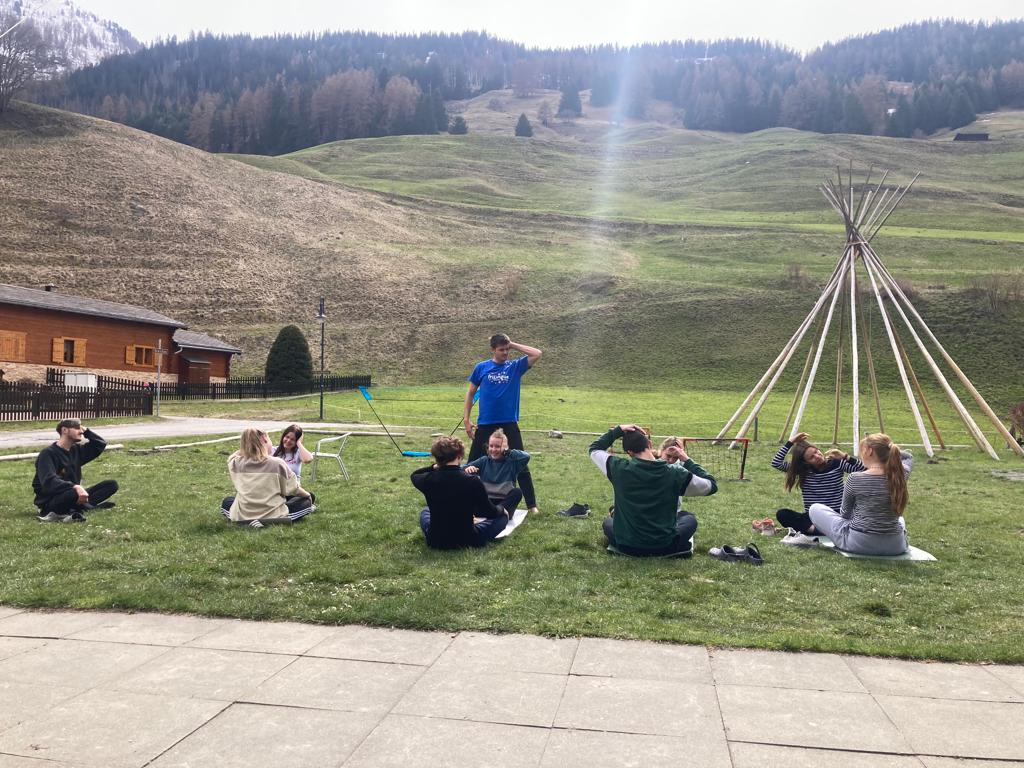
A group game in a circle on the meadow: when a child is homesick, the team gets them involved in activities like this.
How to reach your child and the camp
The contact options below apply to friLingue's language camps in Switzerland. For programs abroad, the partner school's rules and schedules apply.
| Contact | When | Who answers |
|---|---|---|
| Your child's phone | Phone time: about one hour a day, usually before or after dinner | Your child answers. |
| Camp leader | any time, for anything urgent | The camp leader of your child's camp. You get the number before camp. |
| friLingue office in Bern | Monday to Friday, 8 a.m. to 5 p.m. Swiss time | The office team, by email at info@frilingue.com or through the contact page. |
| Photos and videos from camp | regularly during camp week | friLingue sends the updates. |
- You can reach your child during phone time, about one hour a day, usually before or after dinner.
- You can reach the camp leader directly at any time for anything urgent. You get the number before camp.
- You can reach the office in Bern Monday to Friday, 8 a.m. to 5 p.m. Swiss time, by email at info@frilingue.com or through the contact page.
- You get photos and videos from camp regularly during camp week.
When the camp calls you: right away if any health issue comes up, and in every emergency. For serious homesickness, the camp leader calls as soon as the team notices.
Different rules abroad and for air travel
- Programs abroad: The local partner school sets supervision, schedules and class sizes. Classes there may be larger than at the Swiss camps.
- Flying to a Swiss camp: Your child travels with the airline's service for unaccompanied minors (UM service) or on their own; older teens often fly alone. If your child flies with UM service, a friLingue staff member designated in advance meets your child at Geneva or Zurich airport and brings them to camp by car or train. On the return flight with UM service, a friLingue staff member designated in advance takes your child to check-in.
- Flying to a program abroad: With UM service, someone from the partner school or the host family meets your child at the destination airport, not friLingue.
- Who picks your child up after the return flight: If your child flies with UM service, friLingue needs the ID card or passport number of the person picking your child up at the airport after the return flight, whether your child is coming back from a Swiss camp or a program abroad, no later than 48 hours before departure. After that, the pickup person can't be changed. The airlines' age limits are on the page about traveling as an unaccompanied minor.
- Traveling by train: For the Swiss camps there is a chaperoned train transfer from Zurich and Bern. If your child travels to camp alone by train, email friLingue at info@frilingue.com no later than 3 days before camp starts, or contact the camp leader directly.
Staff screening and child protection
- Staff screening: Every staff member goes through a background check, including a criminal record check, before working at camp.
- Training: Training in child protection and emergency management is a routine part of the team's work.
- Child protection: There is a written child protection pledge for staff: a statement in which they commit to protecting the children.
friLingue language camps in Switzerland
friLingue runs language camps in Liddes (St. Bernard) with weekly start dates in spring, summer and fall, plus winter camps. In Braunwald, the 2027 language camps start weekly in summer (start dates as of November 3, 2026). Schwarzsee and Estavayer-le-Lac are summer camps. The weekly price includes round-the-clock supervision, lodging, all meals from the camp's own kitchen, small-group language lessons, and three outings and two workshops a week. The canton of Zurich lists friLingue on its program portal for language stays and exchanges (page in German). Since 2017, friLingue has cooperated with the ch Foundation for Federal Cooperation, the joint organization of Switzerland's 26 cantons. You can reach the office team in Bern Monday to Friday, 8 a.m. to 5 p.m. Swiss time, by email at info@frilingue.com or through the contact page.
See all language camps in Switzerland
Questions parents ask
Can my child go swimming without supervision?
No. During swim time, usually in the afternoon and sometimes in the evening, several staff members are always there.
How do counselors keep the group together on outings?
Every outing follows a set route, and the limit of 12 children per adult staff member applies on the road too (that's friLingue's absolute maximum; in practice it's about 5 children per staff member on outings as well). The team counts heads regularly, older campers look out for younger ones in a buddy system, and every child carries the emergency numbers.
Can my child fly to camp on their own?
Yes. Children fly with the airline's UM service for unaccompanied minors, and older teens often fly alone. With UM service, a friLingue staff member designated in advance meets your child at Geneva or Zurich airport and brings them to camp by car or train.
Will someone speak English with my child?
Yes. In class, the aim is to speak only the language your child is learning. According to the friLingue FAQ, most teachers are multilingual, and all speak at least conversational English.
Is there a visiting day?
As a rule, no. There are no visits during the camp week, so the group can bond and the children learn to manage on their own. The exceptions: when being apart from their parents is far too hard for a child, which almost never happens, or when a parent insists on visiting. friLingue won't stop you. If you'd rather spend your vacation together, the Family Camps in St. Bernard and Braunwald are made for the whole family. Parents can stay at camp, join the activities or take language courses for adults, and depending on the season, go skiing or play tennis.
Who pays for doctor and hospital bills?
Under friLingue's terms and conditions, health and accident insurance is the participant's responsibility. For a program abroad, your child must be insured against illness and accidents in the destination country.
What happens if a camper is caught with alcohol or drugs?
Alcohol and drugs are banned at every friLingue camp. Anyone caught using them is sent home immediately, with no refund of the camp fee.