5 of our favourite activities for teaching a language
Key takeaway: a good language activity doesn't have to be complicated. It's one where students have a real reason to speak, a small challenge to take on, and enough preparation so they don't get stuck. Debate, anecdote duel, interview, planning a trip, etc.: here are the five activities I come back to most often, at camp as well as in the classroom, because they work with almost every group.
I've been teaching French as a foreign language for more than ten years, between France and Switzerland, and I lead classes at friLingue camps. Over time, I've tried a lot of things. Some activities looked brilliant on paper and fell flat after five minutes. Others, very simple ones, ended up becoming classics that students now ask for themselves.
What do the ones that work have in common? Students forget a little that they're doing an exercise. They speak because they want to win, convince, unmask a liar or spend an imaginary budget. And that's exactly when they learn the most.
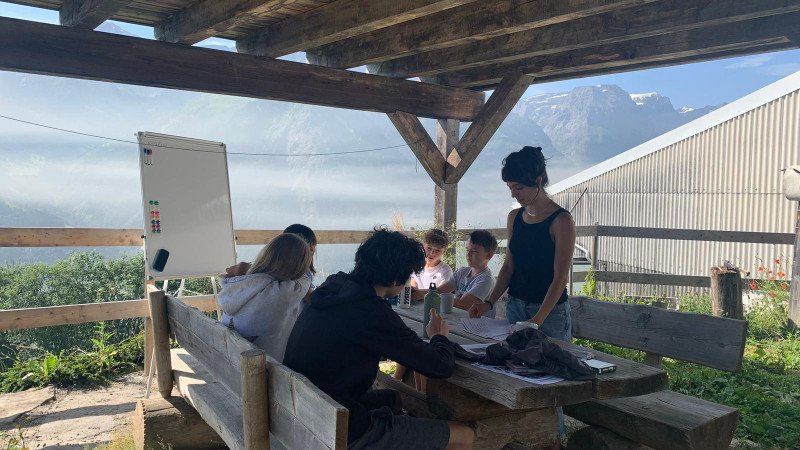
1. The debate: when students absolutely want to be right. A2 and above
Children and teenagers love debates. Give them the chance to contradict someone, and you'll see even the shyest ones raise their hand. But be careful: a debate without preparation means one student talking and everyone else staring at their shoes. Success is decided almost entirely before the debate itself.
Choosing the right topic: You need a theme with good arguments on both sides, otherwise everyone agrees within thirty seconds. Nuclear energy works very well, for example: it's concrete, it touches on ecology, electricity prices and safety, and nobody is really wrong. You can of course use lighter topics too: Would you rather be able to fly or teleport? Have soft teeth or hard fingers? Should phones be allowed at our camps or not?
Preparing the ground: I start with a short video on the topic, then we work together on the vocabulary of the theme (power plant, waste, renewable energy, pollution, accident, etc.). Then comes the most important step: expressions for giving your opinion. "Je pense que..." (I think that...), "Je suis d'accord / pas d'accord parce que..." (I agree / disagree because...), "Par contre..." (On the other hand...), "Oui... mais..." (Yes... but...), "à mon avis" (in my opinion), etc. These little phrases are what allow students to build a real argument instead of throwing out isolated words.
Starting the debate. Students choose their side, or I assign it (it's often more fun to defend an idea you don't share). Each team has about ten minutes to prepare its arguments, then the debate begins and I play the moderator: I give the floor, keep things going, and make sure everyone speaks at least once.
What I like about this activity is that it works on comprehension, vocabulary and spontaneous speaking all at once. And at the end of the session, students leave with expressions they'll reuse everywhere.
2. The anecdote duel: true or false? A2 and above
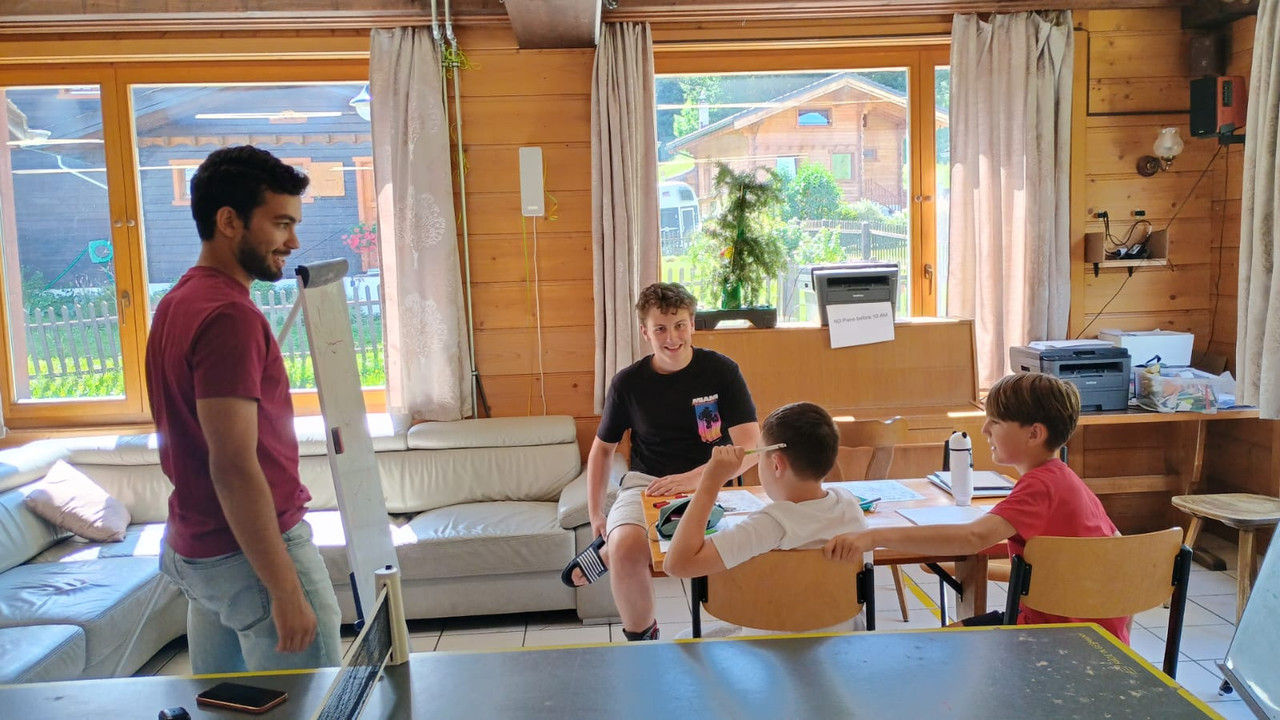
This is probably the activity that causes the most laughter. The principle is simple: each student prepares two anecdotes about themselves, and the group has to guess whether they're true or made up.
Two anecdotes, two formats. The first one is very short, a single sentence, something like "When I was little, I lived in North Korea". The second one is longer, with context: where, when, with whom, how it ended. Each one can be true or completely invented, it's up to the student.
The interrogation: Once the anecdote has been told, the rest of the group asks questions to figure out whether it's a lie. "How old were you?", "What was your school called?", "Why did you leave?". Then we vote: true or false? The suspense at the moment of the reveal is always a highlight.
To launch the activity, I always start with my own examples. Students love trying to catch out the teacher, and it shows them the level of detail expected. With a group that enjoys competition, you can also keep score: one point for each correct guess, one point for each lie that goes unnoticed. It's also important to give students time to prepare and to ban notes during their turn.
The main goal is to practise past tenses (passé composé, imparfait) in a context where students really want to be understood. That's why I avoid it with complete beginners: you need a minimum of basics to tell a story and ask questions.
3. The interview: leaving the classroom. A0 and above
Talking with your teacher is good. Talking with a real stranger is a different story. The interview is the activity that takes students from exercise to real life, and it's often the one they remember the longest.
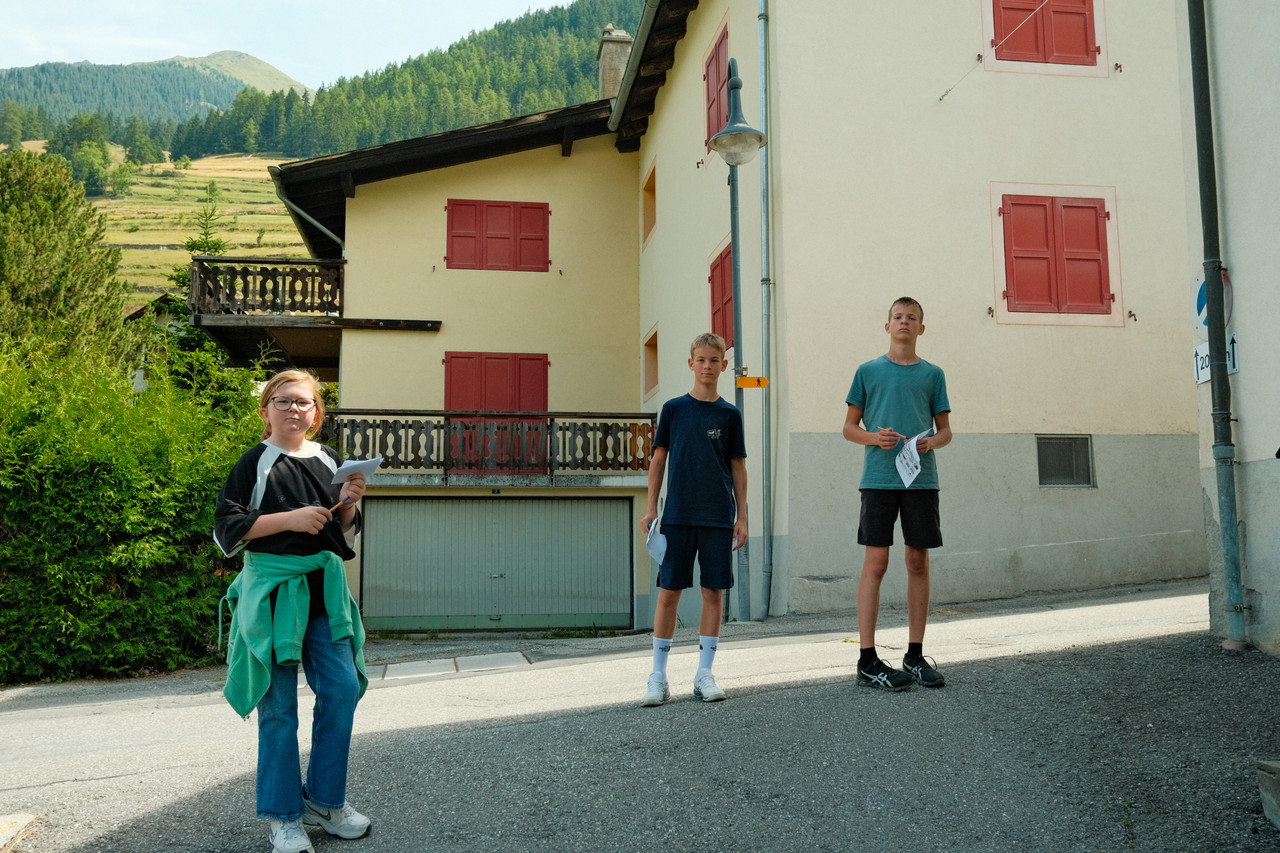
Preparing the questions. In class, students choose a theme (life in the village, the person's job, their childhood memories, their favourite holidays) and write a list of questions together. We check the grammar and politeness (using "vous", "Excusez-moi, est-ce que vous auriez deux minutes ?" / "Excuse me, would you have two minutes?") and make sure the questions call for real answers, not just a yes or a no.
Working on pronunciation. This step is often forgotten, and yet it changes everything. Before going out, we repeat the questions out loud, work on the difficult sounds and on question intonation. A student who knows they're pronouncing correctly is much more willing to approach someone.
Taking action. Then, off to the camp or the village. Students go and ask their questions to a camp leader, the kitchen staff, a shopkeeper or a local resident, and record the answers on their phone. Back in class, we listen to the recordings together, try to understand everything and share what we've learned.
The nerves before approaching the first person, then the pride of having managed to make yourself understood: that's exactly the kind of emotion that anchors a language in memory. At our camps in Switzerland, it's also a great way to connect with the local people.
4. Planning a trip: students become travel agents. A1 and above
For this activity, the roles are reversed: the students plan the teacher's holiday. And believe me, they take their mission very seriously.
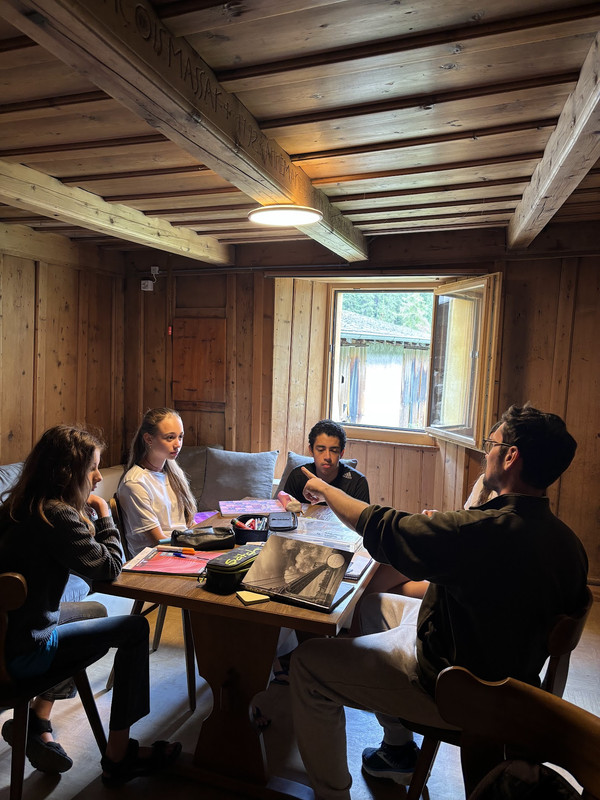
The brief. Each group receives a budget (for example 1,500 Swiss francs for one week) and has to put together a tailor-made trip for me. To find out what I might like, they're allowed to ask me questions: "Do you prefer the sea or the mountains?", "Do you like museums?", "Are you afraid of flying?".
This investigation phase alone is already an excellent speaking exercise.
Research, in the target language only. Students can use their phones and Google, but with one strict rule: everything is done in the language they're learning. They have to find the price of the flight, the hotel and the activities, compare, do their calculations and manage to stay within budget. Without realising it, they read dozens of pages in French: airline websites, hotel reviews, excursion descriptions.
The presentation. To finish, each group presents its trip in a few minutes, like a real travel agency trying to win over a client. And I'm the one who picks the winning trip.
I really like this activity because it mixes everything: reading comprehension, speaking, numbers, negotiation within the group. And it teaches students to use the internet as a learning tool, not just as a translator.
5. Energizers: moving to learn better
Let's be honest: three hours of class is long. Even with the most exciting activities, there always comes a moment when attention drops, eyes drift towards the window and yawns multiply. Rather than fighting it, I take a break of a few minutes with a physical activity.
It can be purely sporty: a 100-metre race or a mini yoga session. But the best is when we move while still practising the language. Here are my two favourites.
Jacques a dit (the French version of Simon Says). A great classic, but remarkably effective. Students only follow orders that start with "Jacques a dit" ("Jacques a dit : touchez votre nez !" / "Simon says: touch your nose!"). If the order doesn't start with the magic formula and someone moves anyway, they're out. Perfect for revising body parts, action verbs and the imperative, and for getting everyone back on their feet.
Another game whose name I don't know requires a bit more organisation, but students love it. You choose two words that sound very similar, for example "chameau" (camel) and "chamois" (chamois) (or "poisson" and "poison", "dessus" and "dessous"). You form two teams, Team Chameau and Team Chamois, standing face to face about two metres apart, each with a safe zone two metres behind it.
Then I tell a story. As soon as I say "chameau", Team Chameau has to tag the players of Team Chamois before they reach their safe zone, and vice versa. Students have to listen carefully to the pronunciation so they don't run the wrong way, and follow the story to anticipate the next word. Laughter guaranteed, and a much sharper ear by the end of the game.
Five minutes of energizer, and the group is ready for another hour of focus. It's an investment that's really worth it.
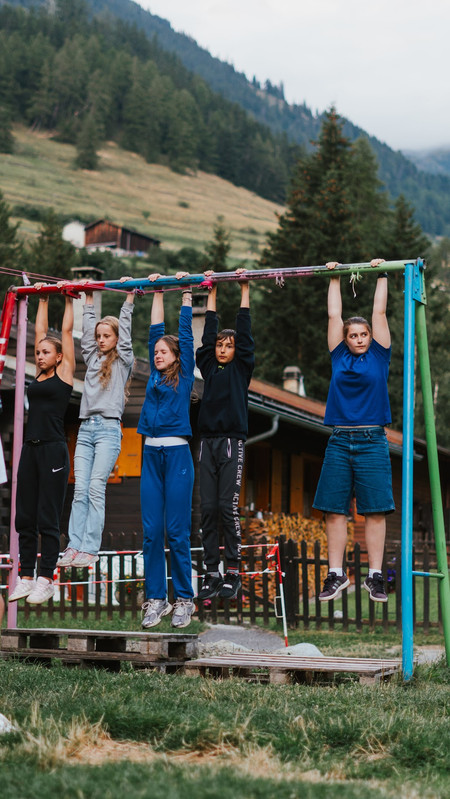
The secret is giving students a real reason to speak
If I had to sum up these five activities in a single idea, it would be this: students learn best when language becomes a means rather than an end. They no longer speak to complete an exercise, they speak to win a debate, trick their friends, interview a stranger, plan a trip or escape the other team.
That's the whole philosophy of our classes at friLingue: small groups of six, lots of speaking, and activities that make you want to take part. And if you're a teacher yourself, feel free to borrow these ideas for your own class. They work just as well with French as with German, English or Italian.
